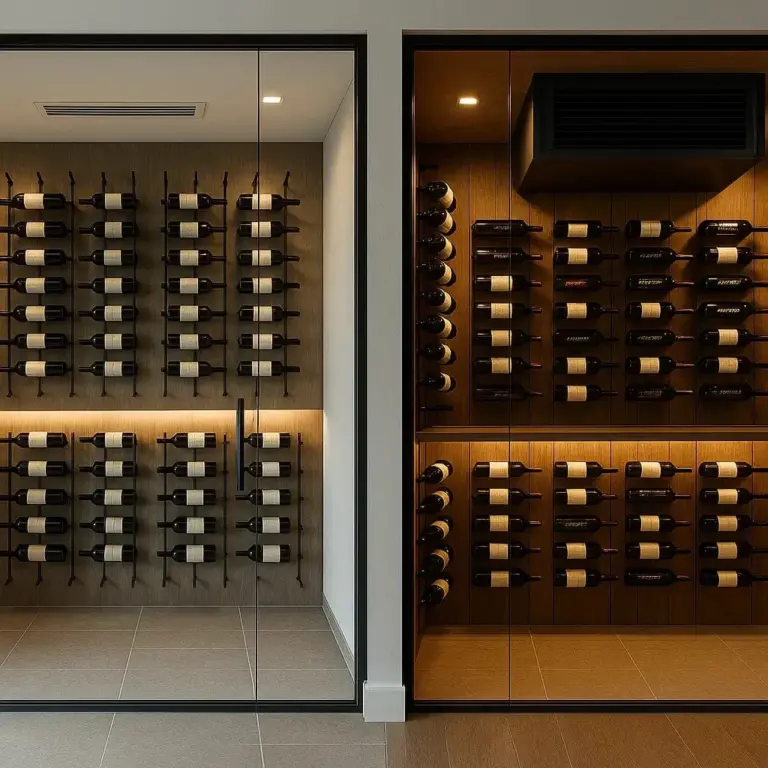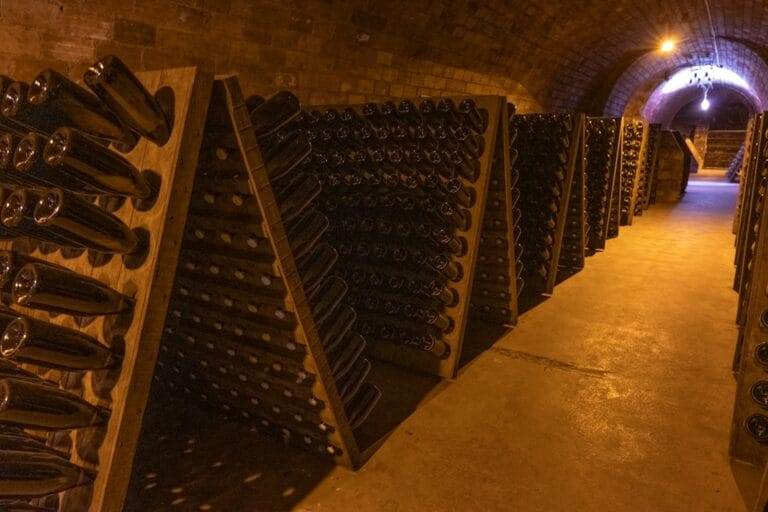

The preservation of fine wine collections within architecturally significant residential or commercial spaces demands a rigorous approach to environmental control. Traditional climate monitoring systems, while foundational, often present limitations in granularity and data integration. This brief outlines the strategic integration of Radio-Frequency Identification (RFID) technology to elevate climate tracking capabilities, offering a more precise and actionable understanding of cellar conditions.
Historically, passive cellar design relied on subterranean construction and natural thermal mass to mitigate temperature fluctuations. The advent of active refrigeration systems marked a significant leap, allowing for consistent temperature maintenance. However, the sophistication of modern collections and their inherent value necessitates a more dynamic and data-driven approach to environmental stewardship.






From Analog to Digital Monitoring
Early monitoring involved mercury thermometers and basic hygrometers, providing snapshot data. The transition to digital sensors offered continuous data logging but often lacked contextual information regarding individual bottles or specific storage zones. The integration of networked sensors improved data aggregation, yet the challenge remained in associating environmental data directly with specific inventory items.
The Imperative of Microclimate Analysis
A wine cellar is not a monolithic climate zone. Variations in airflow, proximity to cooling units, and even the thermal properties of racking materials can create microclimates. These subtle distinctions, often undetectable by broad-area sensors, can impact the aging trajectory of sensitive vintages. Understanding and mitigating these micro-variations is critical for organoleptic stability.
RFID as a Granular Data Layer
RFID technology offers a non-contact method for item-level identification and data transmission. Its deployment within a wine cellar environment extends beyond simple inventory management, providing a robust platform for enhanced climate monitoring. This integration establishes a direct link between environmental conditions and specific bottles or cases.
Passive vs. Active RFID for Climate Integration
- Passive RFID: These tags derive power from the interrogator’s electromagnetic field. They are cost-effective and have a long lifespan, making them suitable for individual bottle or case tracking. While they do not incorporate sensors directly, their unique identification links them to sensor data of their immediate vicinity.
- Active RFID: These tags contain their own power source and can transmit data autonomously. This characteristic allows them to incorporate embedded sensors, such as temperature and humidity, providing real-time, item-specific environmental readings. Their higher cost and battery life considerations typically reserve them for high-value or highly sensitive vintages, or for strategically placed environmental beacons within racking systems.
> Active RFID: An RFID tag incorporating its own power source, enabling it to broadcast signals over longer distances and often incorporating onboard sensors for data collection, such as temperature or humidity.
Strategic Sensor Placement and RFID Tagging
The efficacy of an RFID-enhanced monitoring system hinges on intelligent sensor deployment. Rather than merely placing sensors at arbitrary points, their placement should be informed by airflow dynamics, thermal gradients, and the distribution of the collection. RFID tags on bottles or cases then act as nodal points, enabling the system to infer or directly measure conditions at a refined level.
Data Acquisition and Interpretation for Predictive Analysis
The utility of any monitoring system lies in its capacity to transform raw data into actionable insights. RFID-enabled climate tracking generates a rich dataset that, when properly analyzed, can inform proactive cellar management.
Real-time Data Streams and Anomaly Detection
Active RFID tags with integrated temperature and humidity sensors provide continuous, real-time data streams for specific high-value bottles or critical storage zones. This allows for immediate anomaly detection. For instance, a localized temperature spike around a particular case, not captured by a wall-mounted sensor, can be identified and investigated before it impacts the wine.
Spatial and Temporal Data Correlation
The unique identifiers provided by RFID tags allow for precise spatial mapping of environmental conditions. This enables the construction of a comprehensive “climate topography” of the cellar. By correlating historical climate data with the specific location of a bottle, one can analyze the cumulative impact of environmental exposure over time. This is invaluable, for example, in understanding whether a bottle stored near an exterior wall experienced greater temperature fluctuations than one in the cellar’s core.
Predictive Modeling and Risk Assessment
Accumulated data from RFID-enhanced monitoring forms the basis for predictive modeling. By understanding past climate patterns and their correlation with external factors (e.g., HVAC cycles, seasonal changes), one can forecast potential environmental shifts. This allows for proactive adjustments to cooling cycles or humidity controls, mitigating future risks to the collection. For instance, if historical data indicates a specific corner of the cellar frequently experiences lower humidity during winter months, a humidification strategy can be pre-emptively implemented in that zone.
Integrating RFID with Building Management Systems (BMS)

The true power of an RFID-enhanced climate monitoring system is realized through its seamless integration with the overarching Building Management System (BMS). This moves beyond isolated data points to a holistic environmental control architecture.
Unified Data Dashboard
A properly integrated system presents all environmental data — from general cellar parameters to specific bottle-level readings — on a unified dashboard. This provides a single pane of glass for monitoring, eliminating the need to consult disparate systems. Such a dashboard might include heat maps showing temperature distribution, humidity graphs for specific zones, and alerts tied to specific RFID-tagged items.
Automated Remediation Protocols
Integration with a BMS allows for automated responses to detected environmental deviations. For example, if an active RFID tag on a rare Burgundy detects a temperature excursion beyond its programmed threshold, the BMS can automatically trigger an adjustment to the cellar’s cooling system, isolate the affected zone, or dispatch an alert to the cellar manager. This moves environmental control from reactive to predictive and automatically corrective.
Data Archiving and Compliance Audit Trails
All data generated by the RFID system, including item-level climate histories, sensor readings, and system responses, should be archived diligently. This creates an exhaustive audit trail, providing immutable evidence of environmental conditions. For HNW collectors, this serves as a critical component in provenance documentation, insurance compliance, and demonstrating due diligence in collection care. In instances of insurance claims or valuation assessments, comprehensive environmental records significantly bolster the credibility of the collection’s history.
Security Implications and Data Integrity
The deployment of a sophisticated RFID-enabled monitoring system inherently involves considerations of data security, system hardening, and integrity. Given the value of the assets being protected, these aspects cannot be overstressed.
Encrypted Data Transmission
All data transmitted from RFID tags, interrogators, and server components must be secured via robust encryption protocols. This mitigates the risk of unauthorized interception or manipulation of critical environmental data, which could otherwise compromise the integrity of the monitoring system or provide false assurances regarding cellar conditions.
System Redundancy and Failover Measures
Critical components of the RFID monitoring infrastructure, including power supplies, network connectivity, and data storage, should incorporate redundancy and failover mechanisms. This ensures continuous operation and data collection even in the event of component failure. A “dark period” in environmental data collection, however brief, can lead to uncertainty regarding the collection’s welfare during that interval.
Access Control and User Rights Management
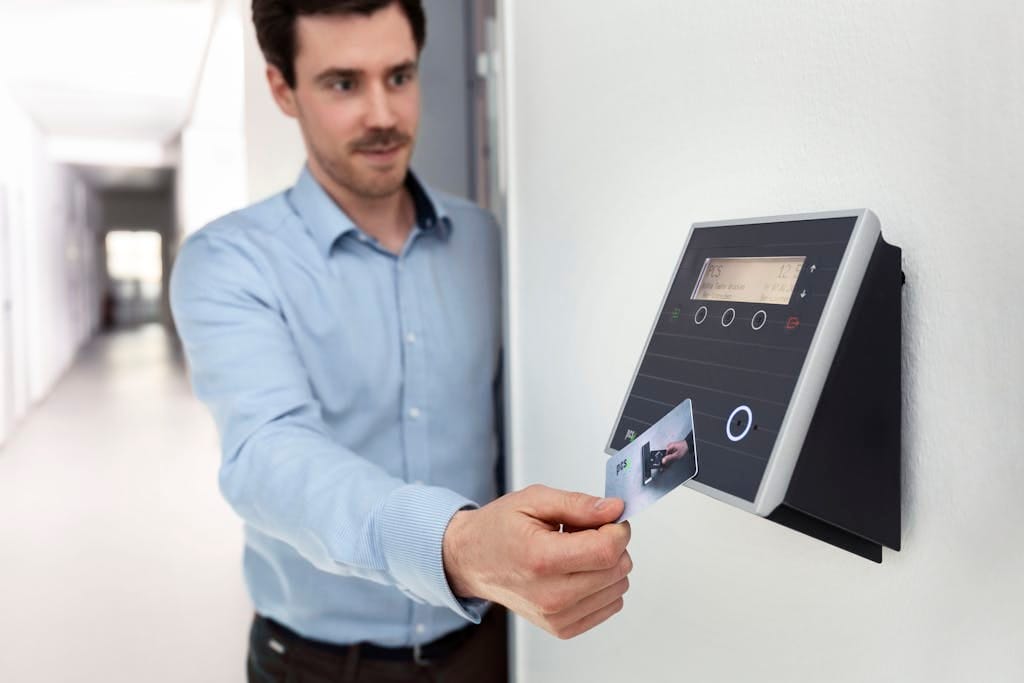
Access to the monitoring system interface and its data should be strictly controlled via multi-factor authentication and role-based access. Different stakeholders — a facilities manager, a private collector, or a consulting sommelier — will require varying levels of access and permissions, ensuring that sensitive data is only accessible to authorized personnel. Adherence to least privilege principles is paramount in system design.
The strategic implementation of RFID technology within a wine cellar environment transcends conventional climate monitoring. It establishes a highly granular, integrated, and predictive system for environmental stewardship, offering an unparalleled level of insight into the conditions surrounding each specific bottle. This approach is not merely about data collection; it is about extending the lifespan and ensuring the organoleptic integrity of irreplaceable liquid assets.
We invite architects, custom home builders, and high-net-worth collectors to engage in a Technical Design Consultation at our San Francisco or Walnut Creek showrooms. During this session, we can explore the integration of these advanced monitoring strategies into your next project or conduct a Portfolio Protection Review for an existing cellar.
FAQs
What is RFID tracking and how does it work?
RFID (Radio Frequency Identification) tracking uses electromagnetic fields to automatically identify and track tags attached to objects. These tags contain electronically stored information that can be read by RFID readers without direct line of sight.
How can RFID tracking be integrated with climate monitoring systems?
RFID tracking can be integrated with climate monitoring systems by attaching RFID tags to sensors or assets that monitor environmental conditions. This allows for real-time tracking of both the location and climate data, enabling better management and analysis.
What are the benefits of merging RFID tracking with climate monitoring?
Merging RFID tracking with climate monitoring improves data accuracy, enhances asset management, enables real-time environmental condition tracking, and supports proactive decision-making in industries such as agriculture, logistics, and manufacturing.
In which industries is the combination of RFID and climate monitoring most useful?
This combination is particularly useful in agriculture for crop and livestock management, in supply chain logistics for temperature-sensitive goods, in pharmaceuticals for storage condition monitoring, and in manufacturing for maintaining optimal production environments.
Are there any challenges associated with combining RFID tracking and climate monitoring systems?
Challenges include ensuring compatibility between different technologies, managing data integration and analysis, maintaining system reliability in harsh environments, and addressing privacy and security concerns related to data collection and transmission.