
The integrity of a wine cellar’s environment is a paramount concern for discerning collectors and the professionals entrusted with its creation. When contemplating the selection of materials for wine storage, particularly the wood components designed to house and display a curated collection, a rigorous understanding of material science and its implications for long-term preservation is essential. This document will guide you through the strategic selection of eco-friendly wood species for wine cellars, grounding our recommendations in established scientific principles and acknowledging the unique environmental considerations of the San Francisco Bay Area. Our objective is to facilitate informed decisions that balance sustainability with the uncompromising demands of optimal wine maturation and display.
The Imperative of Material Selection in Wine Cellar Construction
The subterranean or climate-controlled environment of a wine cellar presents a unique set of challenges for organic materials. Unlike conventional interior applications, wine storage demands materials that actively contribute to, or at least do not detract from, the creation and maintenance of a stable, low-humidity, and inert atmosphere. The inherent hygroscopicity of wood, its propensity to absorb and desorb moisture from its surroundings, is a critical factor. In a wine cellar, uncontrolled moisture exchange can lead to detrimental consequences, including the growth of deleterious mold and mildew, the degradation of cork integrity, and the potential for volatile organic compound (VOC) off-gassing that can taint wine. Furthermore, the aesthetic and structural qualities of wood must align with the architectural vision of the space, while also adhering to the strict building codes and the specific microclimates prevalent in the Northern California region. This necessitates a proactive approach to material sourcing, prioritizing species that exhibit favorable psychrometric characteristics and possess a low susceptibility to environmental fluctuations.
Understanding Wood’s Psychrometric Responsibilities
The science of psychrometrics, which deals with the thermodynamic properties of moist air and its interactions, is fundamental to understanding how wood influences the wine cellar environment. Wood, as a porous organic material, acts as a hygrometer itself, its moisture content fluctuating in response to the ambient relative humidity (RH). The equilibrium moisture content (EMC) of wood is a direct consequence of this relationship. For optimal wine storage, an RH between 50% and 70% is generally recommended. Within this range, the wood will remain sufficiently hydrated to prevent excessive shrinkage and cracking, which can compromise structural integrity and seal integrity. Concurrently, it will not absorb enough moisture to promote microbial growth on its surface or within its matrix.
Equilibrium Moisture Content (EMC) and Its Significance
The EMC is not a fixed value for a given wood species; it is a function of the ambient RH and temperature. Different wood species will achieve different EMCs under identical environmental conditions. This is primarily determined by the wood’s cellular structure, the presence of extractives, and the nature of the wood’s bonding. Species with a higher density and a greater proportion of closed cells tend to have lower EMCs and exhibit less variability in moisture content across a given RH range. This inherent stability is crucial for wine cellar applications, as it minimizes the potential for dynamic moisture exchanges that can disturb the cellar’s equilibrium. For instance, woods like redwood or cedar, while often aesthetically pleasing, possess a higher susceptibility to moisture fluctuations if not properly sealed, which can be exacerbated by the marine influences of the San Francisco Bay.
Vapor Barrier Integrity: A Critical Design Element
The strategic application of vapor barriers is indispensable in mitigating uncontrolled moisture transmission. While wood itself exhibits a degree of vapor resistance, its porosity necessitates a robust barrier system to prevent vapor ingress from the surrounding building envelope or egress into the cellar from humid external environments. The concept of vapor barrier integrity is directly linked to the wood’s hygrometric behavior. A well-constructed vapor barrier acts as a selective membrane, allowing for controlled moisture management while preventing wholesale diffusion. When considering wood species for interior racking and paneling, their vapor transmission rate (VTR) becomes a crucial data point. Species with inherently lower VTRs require less aggressive vapor barrier measures, simplifying installation and reducing potential points of failure. This is particularly relevant in a region like the Richmond District, where the pervasive salt-air humidity demands vigilance in preventing moisture ingress.

Identifying Eco-Friendly Wood Candidates
The term “eco-friendly” in the context of wood selection for wine cellars encompasses several critical considerations: sustainable forestry practices, low VOC emissions, durability, and responsible sourcing. It is imperative that material choices align with principles of environmental stewardship, particularly in a region as environmentally conscious as the Bay Area. This necessitates a departure from traditional, less sustainable options.
Sustainable Forestry Certifications: A Prerequisite
For any wood species to be considered genuinely eco-friendly, adherence to recognized sustainable forestry certifications is a non-negotiable prerequisite. These certifications, such as the Forest Stewardship Council (FSC) or the Sustainable Forestry Initiative (SFI), guarantee that the timber has been harvested responsibly, ensuring the long-term health and biodiversity of forests. Verification of these certifications is crucial for establishing the provenance and environmental credentials of the lumber. This diligence is not merely an ethical consideration; it often correlates with superior wood quality, as sustainably managed forests tend to yield wood with more consistent properties.
Low VOC Emissions: Preserving Wine Purity
The liberation of Volatile Organic Compounds (VOCs) from building materials is a recognized concern in enclosed environments. While the quantities may be minute, the olfactory sensitivity of wine can render it susceptible to off-flavors and aromas from VOC off-gassing. Therefore, selecting wood species with naturally low VOC content is paramount. This is often a function of the wood’s chemical composition, specifically the presence of volatile extractives. Many of the denser, closed-grain hardwoods tend to exhibit lower VOC emissions compared to their softer, more resinous counterparts. The clinical assessment of a wood’s VOC profile, often available through manufacturer specifications or scientific studies, is an integral part of the selection process.
Material Hygroscopicity and Thermal Damping
The controlled environment of a wine cellar is designed to buffer the wine from external thermal fluctuations. The materials used within the cellar play a significant role in this buffering capacity, and their hygroscopic nature is inextricably linked to their thermal properties.
The Damping Modulus of Wood
The damping modulus, a measure of a material’s ability to dissipate vibrational energy, is a less frequently discussed but relevant property in material selection for enclosed spaces. While its direct impact on wine preservation is minimal, it contributes to the overall acoustic and structural stability of the cellar. More pertinent to thermal regulation is the wood’s thermal conductivity and its capacity for thermal mass or “heat sink” effect. Denser woods, with their higher mass, can absorb and release heat more slowly, contributing to a more stable internal temperature. This is analogous to the thermal performance of a well-constructed adobe wall in a desert climate, providing a gradual response to external temperature shifts.
Moisture Content and Thermal Conductivity
The relationship between a wood’s moisture content and its thermal conductivity is inverse. As the moisture content of wood increases, its thermal conductivity generally increases. This means that a wood that is inherently stable in its moisture content, maintaining an equilibrium RH within the desired range, will also exhibit more consistent thermal insulation properties. Conversely, a wood that experiences significant moisture fluctuations will have more variable thermal conductivity, potentially compromising the cellar’s thermal stability. This underscores the importance of selecting woods that are naturally resistant to moisture absorption or that can be effectively sealed to minimize moisture exchange. This is a critical consideration for cellars located in proximity to the coastal fog lines, where ambient humidity can be a significant factor.
Strategic Wood Species Recommendations for Eco-Conscious Design
Based on the principles outlined above, several wood species offer a judicious balance of sustainability, performance, and aesthetic suitability for high-caliber wine cellars.
White Oak (Quercus Alba): A Proven Performer
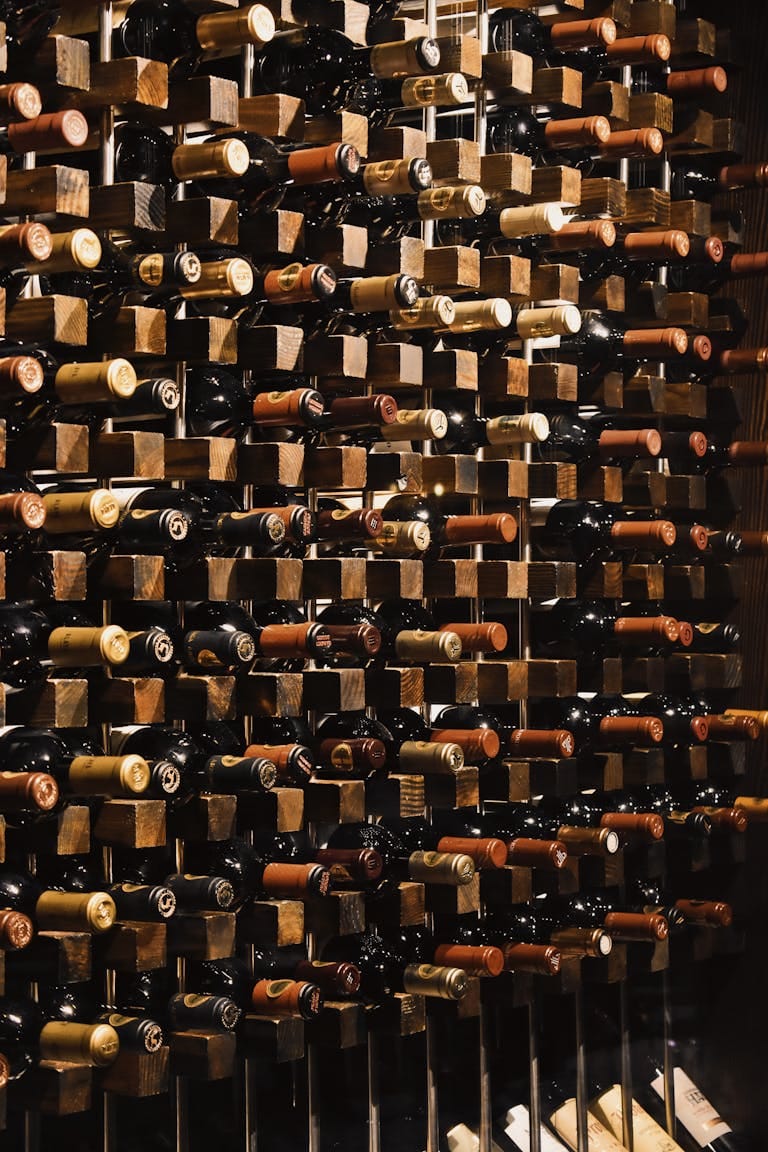
White oak, particularly when sourced from sustainably managed forests in the United States, presents a compelling option. It exhibits moderate hygroscopicity, excellent dimensional stability, and a low VTR, making it a robust choice for wine racking and cabinetry. Its closed-grain structure contributes to a desirable low VOC profile. Furthermore, its natural resistance to decay and insect infestation enhances its longevity, reducing the need for chemical treatments.
Considerations for White Oak
- Sourcing: Prioritize FSC-certified lumber from North American producers.
- Finishing: A low-VOC, water-based sealant is recommended to further enhance vapor resistance and protect the wood’s surface integrity.
- Aesthetic: The pale, creamy color and clear grain of white oak offer a sophisticated and timeless aesthetic, aligning with the understated elegance often found in Napa Valley residences.
Redwood (Sequoia sempervirens): A Regional Specialist
Northern California’s iconic redwood is a natural contender, possessing exceptional durability and natural resistance to decay owing to its high tannin content. Its inherent resistance to insect damage is a significant advantage. While visually appealing, its hygroscopic nature requires careful consideration.
Considerations for Redwood
- Moisture Management: Due to its more pronounced hygroscopicity compared to oak, diligent vapor barrier detailing is essential when using redwood. The higher ambient humidity in coastal San Francisco neighborhoods necessitates meticulous application to prevent moisture ingress.
- Sourcing: Ensure the redwood is sourced from responsibly managed, certified forests to uphold eco-friendly principles. Old-growth or virgin redwood is generally discouraged due to its rarity and the environmental impact of its harvesting.
- Dimensional Stability: While durable, redwood can exhibit some dimensional changes with significant shifts in RH. Proper acclimatization and sealing are therefore critical.
Cypress (Cupressus spp.): A Resilient Choice
Certain species of cypress, such as Bald Cypress (Taxodium distichum), offer remarkable resistance to moisture and decay, making them suitable for humid environments. Their closed cellular structure contributes to good dimensional stability and a relatively low VOC profile.
Considerations for Cypress
- Environmental Resilience: Cypress’s natural resistance to rot and insects is a significant advantage, particularly in environments with elevated humidity.
- Aesthetic: Cypress possesses a distinctive, often knotty appearance, lending itself to more rustic or traditional cellar designs, reminiscent of older wineries.
- Sealing Requirements: While inherently resistant, a high-quality sealant application is still advisable to maintain optimal RH control and prevent excessive moisture absorption, especially in areas like the fog-prone coastal regions of Marin County.
Conclusion: A Strategic Approach to Material Harmony
The construction of a wine cellar is an exercise in precision engineering, demanding an informed and scientific approach to every material choice. As architectural strategists, our role is to equip you with the knowledge to make decisions that not only satisfy aesthetic aspirations and functional requirements but also uphold the principles of environmental responsibility and long-term preservation. By understanding the psychrometric properties and material hygroscopicity of wood, and by anchoring our selection to sustainable forestry practices and low-VOC emissions, we can ensure the creation of wine cellars that are both exceptional and ecologically sound. The integration of these carefully selected materials will contribute to a stable environment, fostering the optimal maturation of your esteemed collection and reflecting a commitment to harmonious design and enduring quality, mirroring the inherent resilience and beauty of the Northern California landscape.
FAQs
What types of wood are considered sustainable for wine storage?
Sustainable woods for wine storage typically include bamboo, reclaimed oak, FSC-certified hardwoods, and other fast-growing or responsibly harvested species. These woods are sourced in ways that minimize environmental impact and promote forest regeneration.
Why is sourcing sustainable wood important for wine storage?
Sourcing sustainable wood helps reduce deforestation, supports biodiversity, and lowers the carbon footprint associated with wood production. For wine storage, it ensures that the materials used do not contribute to environmental degradation while maintaining quality and durability.
How can consumers verify if the wood used in wine storage is sustainable?
Consumers can look for certifications such as FSC (Forest Stewardship Council) or PEFC (Programme for the Endorsement of Forest Certification), which guarantee that the wood comes from responsibly managed forests. Additionally, asking manufacturers about their sourcing practices can provide transparency.
Does sustainable wood affect the quality or aesthetics of wine storage units?
Sustainable wood can offer the same quality, durability, and aesthetic appeal as traditional wood. Many sustainable options, like reclaimed oak or bamboo, provide unique textures and finishes that enhance the look of wine storage while being eco-friendly.
Are there any environmental benefits to using reclaimed wood for wine storage?
Yes, using reclaimed wood reduces the demand for new timber, minimizes waste by repurposing existing materials, and often requires less energy to process. This practice supports circular economy principles and helps conserve natural resources.